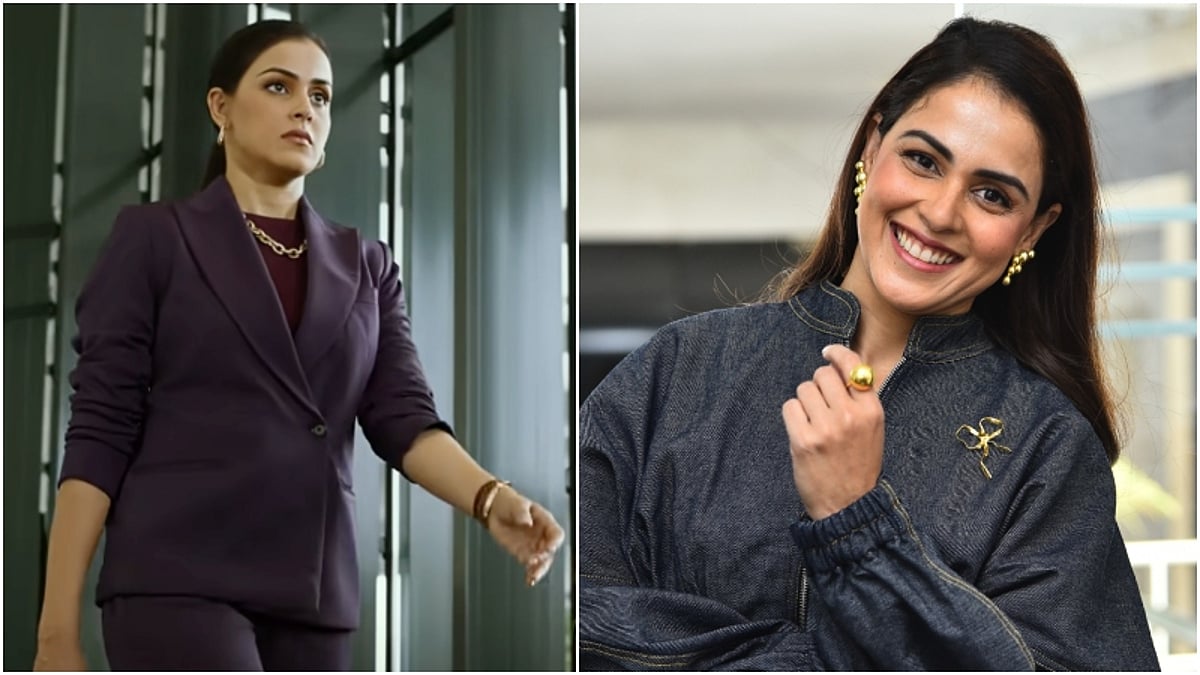

Writer-director Rohit Keerti ambitiously attempts to weave multiple layers of storytelling, but in doing so, the film feels slightly overextended at times. Clocking in at 2 hours and 40 minutes, the film could have used a tighter edit to sharpen the narrative’s tone and pacing. The film’s simple yet philosophical dialogues, while well-intentioned, are a hit-and-miss.
Cinematographer Abin Rajesh, however, succeeds in capturing the beauty of the journey through stunning road shots and drone footage, lending the film a visual charm. The music by R Hari stands out, with the Radhe song, shot amidst the vibrancy of Holi in Mathura, being a standout.
Despite the language barrier, Hindi film actor Poonam Sirnaik, making her Kannada debut, pours her heart into the role of Paru. Naturally, the best support comes from Sudharani, who dubs for Sirnaik. Her voice sounds a little younger than the age specified for her role, but it adds an extra layer of emotion and enriches Paru’s portrayal. Deepika Das, as Payal, the woman masking her inner turmoil, delivers a steady, restrained performance. She’s an independent woman and has less room for emotional depth.
It is Fawaz Ashraf, playing Mithun—a Malayali-Kannadiga—who brings his boundless energy that brightens things up and adds a touch of vivacity to an otherwise sombre narrative.
#ParuParvathy is more than just a journey across India; it’s a story about rediscovery and healing. At its core, it explores the complexities of self-liberation and the power of emotional growth. The bond between Paru and Payal speaks to the universal human experience of grappling with past wounds, and the film ultimately underscores the importance of confronting those wounds to move forward. Paru and Payal’s shared journey feels like a long road to self-discovery, measured in distance and emotion.
#ParuParvathy
Director: Rohit Keerti
Cast: Deepika Das, Poonam Sirnaik, Fawaz Ashraf, and KS Shridhar
Rating : 3/5