
Carbon Credit Market Align With ESG Goals
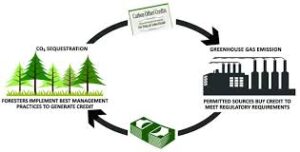
The carbon credit market enables businesses to offset their emissions by purchasing credits from projects that reduce greenhouse gases from the atmosphere. These are typically activities that prevent the deforestation of tropical forests or the destruction of natural carbon sinks, such as peat bogs and coral reefs. Companies may purchase these credits to stay below their regulatory emissions cap or in lieu of other investments and measures to reduce emissions. Either way, every tonne of GHG that doesn’t enter the atmosphere is a step closer to ending the climate crisis and protecting our planet.
Companies are tackling their climate challenges with urgency, often putting a primary focus on reducing emissions from their core business operations. However, due to limitations in efficiency, technologies and scale, many companies will be emitting more than they can eliminate with current efforts alone. In this situation, the voluntary market offers a mechanism to offset these remaining emissions with GHG reductions that are independently verified.
These carbon credit market are sold on a global marketplace through carbon management platforms (VCMs), wholesalers and brokers that source, aggregate and bring these solutions to the final buyers. These can be individuals willing to offset air travel, or companies and financial institutions seeking a robust, credible and cost-effective solution for their sustainability goals.
How Does the Carbon Credit Market Align With ESG Goals?
The supply of these credits is primarily coming from energy efficiency, renewable energy and forestry projects. However, there is a substantial opportunity to grow supply by mobilizing other GHG reduction initiatives, such as avoided nature loss and biodiversity conservation and climate-sensitive agriculture.
When a company needs to purchase carbon credits, they must disclose their greenhouse gas emissions from all of their operations and their plans for reducing these emissions in the future. These disclosures enable them to meet their regulatory compliance requirements, which then drives demand for the credits on the voluntary markets.
The information needed to make informed purchasing decisions is available through a variety of services, including registries, verification providers and carbon offset buyers. Unfortunately, this data is often fragmented and inaccessible, or stored within complex project-level documentation that requires significant resources to navigate and understand. A digital infrastructure is necessary to simplify this process and deliver the data that corporates need.
Using a data platform that integrates and normalizes the underlying information from disparate registry systems is critical to increasing transparency, trust and integrity in the market. This platform could also serve as the foundation for a comprehensive ecosystem of services, enabling new private sector innovation to lower costs and accelerate the growth of the carbon market.
In the short term, the carbon market has already been bolstered by an increased focus on integrity and quality initiatives, such as a set of Core Carbon Principles and attribute taxonomy to ensure high-integrity credits. However, there are still significant barriers to liquid markets, such as price transparency and demand signals.
The carbon market needs to be reimagined to create a global, transparent and high-integrity market that channels capital into impactful climate action and low-carbon infrastructure. The industry needs to work together to achieve this by leveraging technology to simplify the process and deliver on the potential of the carbon market to be a significant channel for capital and support companies in their efforts to reduce their environmental footprint.


