
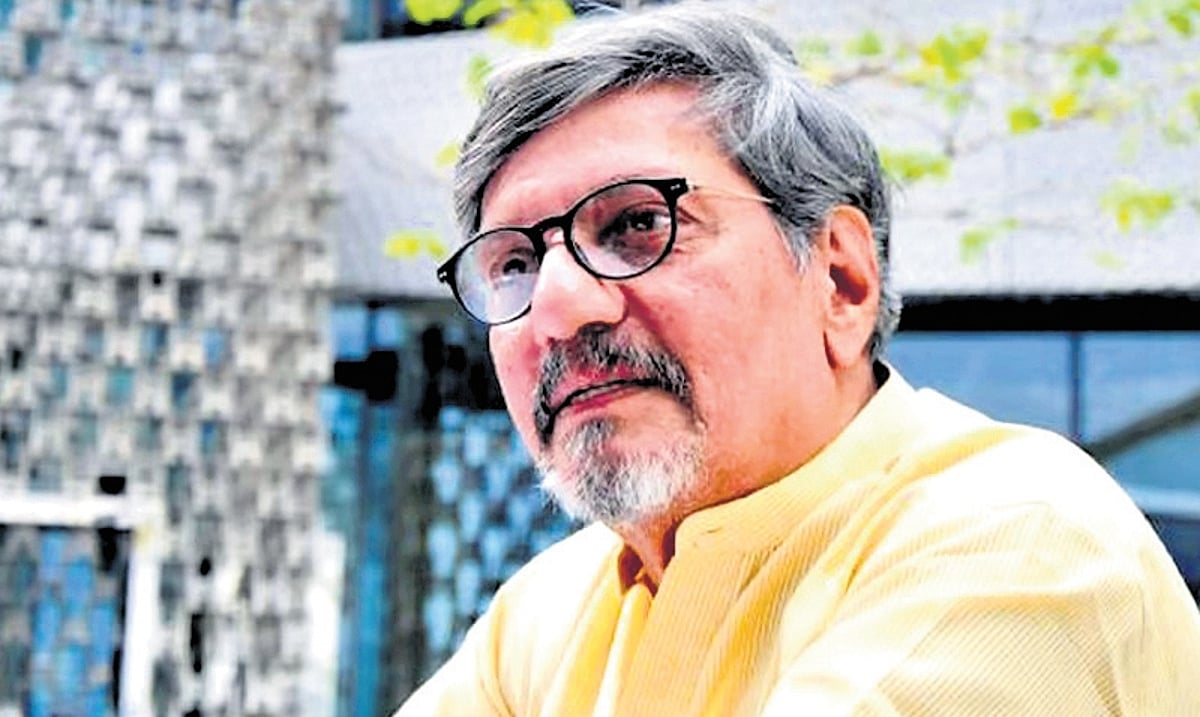
Amol Palekar dedicates his memoir to ‘those who believe in the power of resistance’. Looking at the man through the viewfinder that this book provides, one sees a quiet, determined fighter who will not let the system, injustice, or conventional practices deter him.
The book brings to life a different person from the screen image he had mostly adopted in films like Rajnigandha and Gol Mal. In real life, as he shows us through the memoir, he believes in ignoring whatever tries to pull him down or fit him into a straitjacket.
Yet, in his own way, despite being the stormy petrel who never gave much thought before staging a political satire in open spaces or filing a suit against a formidable producer like B.R. Chopra, or yet again, filing PILs against censorship, Palekar dons the man next door image in real life, shying away from publicity and all the trappings that go with stardom.
Among the many aspects of his career, the book is an acknowledgement of the many people who have influenced Palekar’s life. He paints a strong word picture of his first mentor, Satyadev Dubey, the enfant terrible of Marathi and Hindi theatre. Palekar’s narration of his last meeting with Dubey is poignant in its understated depth of feeling.
It was Dubey who pulled Palekar onto the acting stage, telling him in his typical manner that he was recruiting him, not because he saw any great talent in Palekar but because he seemed to have plenty of time on his hands. Despite Dubey’s words, Palekar went on to not just act in many noteworthy plays but direct a few path-breaking ones of his own.
Perhaps it was Dubey’s penchant for improvising on the playwright’s original that inspired Palekar to edit almost every play he directed in marked ways. Badal Sircar, Mohan Rakesh, and poet and playwright Sadanand Rege are others whom Palekar acknowledges to be shapers of his journey as an actor and director.
The remarkable thing about this book is that at every point, in every chapter, Palekar talks about a learning that he shares with the reader. On his own admission, it is a conscious inclusion, and it takes the book to a level above being a narrative about his life and work.


