
Paddle Boarding Work
Paddle boarding is a low-impact exercise that strengthens nearly all of your major muscle groups. Regular paddle boarding builds strength and stamina, improves posture, and helps maintain bone density. It also increases your cardiovascular endurance. In addition, it’s a great way to relax and enjoy the outdoors.
Standup paddle boarding might look easy from the shore, but it requires serious muscles to propel your board through the water. This activity works the core, legs, arms and shoulders. It can even help you achieve six-pack abs if you’re careful with your diet and work out the rest of your body, too.
Most people who start paddle boarding are surprised to learn how many muscles they’re working. While the biceps and triceps do a bit of the heavy lifting, the majority of the power comes from the back and core muscles.
Your core is one of the most important parts of Paddle board, and it’s essential for maintaining an upright position on the board. Your rectus abdominis and transverse abdominis muscles are activated every time you stroke the paddle. Touring paddleboards offer a good balance of stability and speed, but they require a bit more skill and technique to balance on due to their narrower shape. They often come with features like tie-downs to secure gear for extended paddling trips.
In addition, paddle boarding engages your abdominal muscles, which is important for stabilizing the board. It can be difficult to achieve strong, toned abs from paddle boarding alone, but it’s a great compliment to other exercises that target these muscles, such as planks and sit-ups.
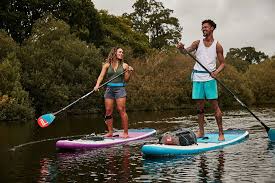
What Muscles Does Paddle Boarding Work?
The paddle strokes that you perform while paddle boarding will also engage your shoulder and forearm muscles. If you’re using the proper technique, you should keep your hands about shoulder width apart on the shaft of the paddle and angle the blade slightly forward from the shaft toward the nose of your board. This is called the power face, and it’s what generates most of the power of the stroke.
With a few other techniques, you can do advanced paddle boarding moves that can turn your board more abruptly or even move it side to side. You’ll have to step off the board in a surfing stance, lower your hips and rotate your shoulders to the direction you want to go. Then you’ll reach over your head and plant the blade into the water. You’ll then pull the blade towards you and slice it through the water to move the board in the desired direction.
Standup paddle boarding is a great workout for almost all of your major muscle groups, including the core and upper body muscles. It also strengthens your ankles and feet, helping you stay stable on the board. And while it might be tempting to float on the surface and enjoy the scenery, remember that proper form is crucial for safety. So get out there and paddle! You’ll be glad you did. And don’t be alarmed if you’re sore after your first few paddle boarding sessions! That soreness is a good thing – it means you’re building your muscle strength and endurance. Keep up the paddle boarding and you’ll soon be feeling like a pro.


